
1. Executive Summary & Strategic Industrial Takeaways
The global insulated drinkware and reusable hydration hardware sector has crossed an inflection point in its industrial lifecycle. What was once categorized as a seasonal promotional novelty or simple outdoor camping accessory has matured into a disciplined, multi-billion-dollar precision engineering domain. Procurement leaders across North America, Europe, Oceania, and Latin America are confronting a radically transformed landscape where unit Free-On-Board (FOB) price points represent only one variable in a complex sourcing equation. Today, enterprise brand equity is inextricably tied to supply chain integrity, microstructural alloy purity, total lead-free sealing verification, and verifiable decarbonization under international regulatory scrutiny.
Operating from our consolidated 65,000 square meter smart manufacturing campus in Quanzhou High-Tech Industrial Zone, Fujian Province, Unifan Group processes millions of kilograms of austenitic stainless steel coils and commercially pure titanium sheets annually. Our operational telemetry across high-volume production lines reveals several macro structural realities:
- The Imperative of Material Elevation: Sourcing specifications have migrated rapidly from commodity single-wall polymers and standard commercial SUS304 (18/8) steel toward medical-grade SUS316 inner liners and ultralight Grade 1 titanium vessels. This trend is accelerated by consumer awareness of microplastics, chemical leachables, and taste neutrality when handling acidic cold-brew coffees, natural citrus beverages, and electrolyte sports supplements.
- Robotic Process Repeatability: Sub-millimeter tolerances required for modern ergonomic handles, leakproof double-threaded closures, and automotive cupholder geometries cannot be achieved with legacy manual stamping presses. Modern tier-1 factories must deploy automated hydraulic tandem press lines, 6-axis robotic laser seam welders, and continuous multi-zone high-vacuum tunnel furnaces operating at pressures below 1.0×10⁻³ Pascals.
- Comprehensive Regulatory Harmonization: Compliance is no longer an afterthought verified by sporadic downstream lab testing. Leading global brands require complete end-to-end traceability, spanning raw coil Melt Test Certificates (MTC), California Proposition 65 total lead audits (<10 ppm verified), German LFGB Section 30/31 sensory and heavy metal migration limits, and annual Sedex SMETA 4-Pillar social compliance accreditations.
2. Historical Context, Sourcing Dynamics & Market Evolution
To understand the contemporary complexities of buyer factory audit, international delegation, quality validation, vendor qualification, and long-term contract execution, one must examine the metallurgical and economic evolution of consumer drinkware over the past three decades. In the late 1990s and early 2000s, global hydration was dominated by two flawed vessel typologies: single-use polyethylene terephthalate (PET) disposable plastic bottles and single-wall extruded aluminum canisters lined with epoxy-phenolic resins. Both options introduced severe long-term vulnerabilities: single-use plastics generated monumental ecological damage across marine and terrestrial ecosystems, while resin-lined aluminum containers raised persistent consumer health alarms over Bisphenol A (BPA) extraction and suffered from rapid thermal equilibration.
Between 2008 and 2018, the commercialization of double-wall austenitic stainless steel vacuum insulation fundamentally reshaped the consumer market. Industrial manufacturers proved that an evacuated annular cavity between two concentric steel vessels could preserve hot beverages for 12 hours and cold liquids for 24 hours without external condensation or temperature transfer. However, early production methods were plagued by high scrap rates, inconsistent manual longitudinal welding seams, and the dangerous industry-wide practice of using lead-bearing glass frit solder beads to seal bottom vacuum exhaust ports.
Between 2020 and 2026, the industry experienced what retail economists designate the "Hydration Lifestyle Revolution." Reusable drinkware transitioned from functional outdoor gear into essential everyday carry (EDC) accessories, corporate status symbols, and wellness lifestyle statements. The viral proliferation of high-capacity 40oz insulated travel tumblers equipped with comfortable injection-molded side handles and multi-position splash-resistant lids demonstrated that consumer demand for high-performance hydration hardware is robust, durable, and highly brand-loyal.
Simultaneously, international retail supply chains have confronted unprecedented geopolitical, fiscal, and logistical volatility. Ocean freight fluctuations, tightening European Union border carbon accounting regulations, and volatile London Metal Exchange (LME) nickel and molybdenum surcharges have rendered speculative spot-market sourcing obsolete. Modern brand owners now cultivate multi-year strategic joint development manufacturing (JDM) relationships with vertically integrated Chinese production campuses that maintain in-house toolmaking facilities, automated surface finishing lines, and accredited quality testing centers.
3. Deep-Dive Engineering & Materials Science Analysis
At the core of high-performance insulated drinkware lies the uncompromising physics of thermodynamics, mechanical metallurgy, and fluid mechanics. When engineering solutions for buyer factory audit, international delegation, quality validation, vendor qualification, and long-term contract execution, technical teams must analyze every physical and chemical variable influencing product structural longevity, thermal retention efficiency, and automated manufacturing yield rates.
3.1 Thermodynamics of Vacuum Annulus Isolation and Radiation Suppression
Thermal energy exchange between the beverage volume within an insulated vessel and the ambient external environment proceeds via three simultaneous classical mechanisms: conduction, convection, and electromagnetic radiation. The comprehensive heat flux equation governing double-wall vacuum vessels is defined as:
Q_total = Q_conduction + Q_convection + Q_radiation = -k · A · (∇T) + h_c · A · (T_surface - T_fluid) + ε · σ · A · (T_inner⁴ - T_outer⁴)
In a conventional single-wall metal or plastic vessel, gaseous molecular conduction and natural convective air circulation account for more than 75% of total thermal loss. To eliminate conduction and convection, Unifan engineers construct a hermetically sealed annular space between an inner hydroformed liner and an outer structural jacket. However, the physical quality of that vacuum determines operational performance:
- Mean Free Path and the Knudsen Regime: Under standard atmospheric pressure (101.3 kPa), the mean free path λ of atmospheric gas molecules is approximately 68 nanometers. In a typical drinkware vacuum gap of 1.5mm to 2.5mm, intermolecular collisions dominate, enabling rapid thermal energy conduction across the gap.
- Ultra-High Vacuum Brazing (≤ 1.0×10⁻³ Pa): In Unifan's continuous multi-zone vacuum tunnel furnaces, atmospheric gas is systematically evacuated until chamber pressure falls below 1.0×10⁻³ Pascals. At this ultra-high vacuum level, the mean free path of residual air molecules expands to greater than 50 meters—several thousand times larger than the physical gap width. Consequently, the Knudsen number (Kn = λ / L) exceeds 10, meaning gas molecules travel between walls without colliding with one another. Gaseous conduction and convection collapse to mathematically imperceptible levels.
- Radiative Heat Loss Mitigation via Electrolytic Copper Reflectors: Vacuum insulation is inherently transparent to infrared electromagnetic radiation. Radiant heat transfer scales with the fourth power of absolute temperature (T⁴). To suppress radiation, Unifan applies an automated electrolytic copper flash coating (thickness 1.8 μm to 2.5 μm) or high-purity mirror-finished aluminum barrier to the exterior face of the inner stainless steel wall. The polished copper layer achieves an exceptionally low infrared emissivity coefficient (ε ≤ 0.03), reflecting over 97% of thermal radiation back into the beverage core.
3.2 Austenitic Metallurgy and Deep-Drawing Crystallographic Mechanics
The structural resilience and corrosion resistance of deep-drawn drinkware containers depend fundamentally on austenitic crystal lattice stability. Unifan exclusively sources prime virgin steel coils adhering strictly to ASTM A240 and JIS G4305 standards. In forming a 40oz tumbler body, a flat 0.50mm circular steel blank undergoes up to four progressive hydraulic drawing operations, an ironing pass, and two intermediate annealing stages, enduring an extreme cumulative draw ratio exceeding 2.2:
Under these intense cold deformation strain rates, metastable austenitic stainless steel (particularly standard SUS304) undergoes strain-induced martensitic transformation (α'-martensite). This transformation generates internal residual micro-stresses and introduces localized ferromagnetic behavior, making the vessel vulnerable to delayed cracking and chloride-induced stress corrosion cracking (SCC). To resolve this structural risk, Unifan routes deep-drawn shells through an automated protective atmosphere continuous bright annealing furnace at 1050°C. This thermal soak dissolves precipitated chromium carbides back into solid solution, relieves mechanical residual stresses, and restores the ductile, non-magnetic austenitic face-centered cubic (γ-FCC) crystal matrix.
3.3 Advanced Chemical Passivation and Surface Purity
Following thermal forming and laser seam welding, the interior product contact surface must be metallurgically passivated. Standard mechanical buffing leaves microscopic abrasive residues and localized iron contamination. Unifan incorporates a multi-stage automated electrolytic polishing and chemical passivation line utilizing food-grade citric and nitric acid formulations. This process selectively dissolves free iron particles and enriches the surface with chromium oxide (Cr₂O₃), raising the surface Cr/Fe atomic ratio from 0.8 to greater than 2.4, as verified by X-ray Photoelectron Spectroscopy (XPS). The resulting mirror-smooth, electropolished surface inhibits bacterial bio-film adhesion and prevents flavor retention across diverse beverage profiles.

4. Quantitative Performance Benchmark & Technical Specification Matrix
Data-driven engineering decisions require verifiable empirical benchmarks. The matrix below presents quantitative performance metrics and material tolerances relevant to buyer factory audit, international delegation, quality validation, vendor qualification, and long-term contract execution, established through destructive and non-destructive laboratory evaluations conducted at Unifan's accredited Quality Inspection Center:
| Critical Engineering Parameter | Standard Industry Tolerance | Unifan Precision Standard | Validation Standard | Operational Impact |
|---|---|---|---|---|
| Inner Wall Thickness Uniformity | 0.40mm ±0.06mm | 0.40mm ±0.02mm | Ultrasonic Thickness Gauging | Prevents localized structural collapse |
| Furnace Brazing Vacuum Pressure | 5.0 × 10⁻² Pa | ≤ 1.0 × 10⁻³ Pa | Helium Mass Spectrometry | Eliminates gas conduction heat loss |
| Exterior Powder Coat Adhesion | Grade 3B (ASTM D3359) | Grade 5B (Zero Flaking) | ASTM D3359 Cross-Hatch Tape | Resists 100+ commercial wash cycles |
| Lid Gasket Compression Deflection | 15% - 20% Deflection | 25% - 30% Controlled | ASTM D395 Compression Set | Guarantees 100% leakproof seal inversion |
| Structural Drop Impact Resistance | 1.0 Meter Drop Test | 1.5 Meter Inverted Drop | ASTM D5276 Package Drop | Zero weld seam rupture or vacuum failure |
Rigorous examination of these quantitative metrics demonstrates that precision engineering interventions generate dramatic improvements in field reliability and consumer satisfaction. For example, maintaining inner wall thickness uniformity within ±0.02mm eliminates localized structural hot-spots during continuous vacuum brazing at 1050°C, reducing vacuum degradation failure rates from an industry average of 1.8% down to less than 0.05%. Similarly, elevating powder coating adhesion from Grade 3B to Grade 5B ensures that exterior graphic branding and textured coatings withstand 100+ commercial high-temperature dishwasher cycles without blistering, chalking, or delamination.
5. Global Food-Contact & Environmental Regulatory Compliance Framework
In modern consumer goods procurement, regulatory compliance represents an absolute operational prerequisite. A single failure in toxicological migration, hazardous substance containment, or packaging labeling can trigger customs impoundments, nationwide retail recalls, brand destruction, and catastrophic financial liabilities. When engineering products aligned with buyer factory audit, international delegation, quality validation, vendor qualification, and long-term contract execution, Unifan implements a multi-layered compliance architecture satisfying the world's most exacting legal jurisdictions:
5.1 United States FDA 21 CFR and California Proposition 65 Standards
Within the United States market, all drinkware vessels and closure assemblies are regulated under Title 21 of the Code of Federal Regulations (CFR):
- FDA 21 CFR 175.300 (Resinous and Polymeric Coatings): Governs surface coatings, lacquers, and inner liners intended for repeated food contact. Mandates that total extractives cannot exceed 0.5 mg per square inch of food-contact surface when subjected to distilled water, 8% ethanol, or n-heptane food-simulating solvents under specified time and temperature conditions.
- FDA 21 CFR 177.2600 (Rubber Articles Intended for Repeated Use): Sets strict limits on food-grade silicone sealing gaskets and leakproof O-rings. The standard requires total extractives below 20 mg/in² during the first 7 hours of continuous boiling water immersion and below 1 mg/in² during subsequent 2-hour boiling cycles. Unifan exclusively utilizes medical-grade platinum-cured silicone elastomers, eliminating residual volatile organic compounds (VOCs) and peroxide catalyst by-products.
- California Proposition 65 (Safe Drinking Water and Toxic Enforcement Act): Enforces rigorous testing for total lead (Pb), cadmium (Cd), and restricted ortho-phthalates (DEHP, DBP, BBP, DINP, DIDP, DnOP). In response to recent high-profile consumer class-action litigation surrounding exposed lead solder sealing beads in competitor tumblers, Unifan guarantees a 100% Lead-Free Vacuum Sealing Architecture. Our vessels employ proprietary copper-nickel eutectic alloy brazing rings, ensuring total lead concentrations remain below 10 parts per million (ppm)—far below the 90 ppm California Prop 65 warning threshold.
5.2 European Union LFGB, DGCCRF, and EU CBAM Carbon Regulations
European food contact legislation is globally recognized as the most stringent regulatory regime:
- German LFGB (Lebensmittel-, Bedarfsgegenstände- und Futtermittelgesetzbuch) Sections 30 & 31: German law enforces sensory evaluation under DIN 10955. Water or food simulants exposed to the container at 70°C for 24 hours are evaluated by an accredited human sensory panel; any discernible transfer of odor or taste (score > 2.5 on a 4-point scale) causes immediate regulatory failure. Additionally, specific release limits (SRML) established by the Council of Europe Resolution CM/Res(2013)9 impose strict ceilings on heavy metal migration: cobalt (<0.02 mg/kg), chromium (<0.250 mg/kg), nickel (<0.14 mg/kg), and manganese (<0.1 mg/kg).
- French DGCCRF Décret 92-631: Requires complementary corrosion-resistance immersion testing in 0.5% citric acid and 3% sodium chloride solutions to ensure no alloy breakdown or micro-pitting occurs under aggressive food contact.
- European Union CBAM (Carbon Border Adjustment Mechanism): Beginning in 2026, importers of stainless steel goods (HS Code 7323) entering the EU must purchase CBAM carbon certificates corresponding to embedded greenhouse gas emissions. Unifan supports European enterprise buyers with audited Scope 1, Scope 2, and embedded precursor emissions dossiers complying with EU Regulation 2023/956, giving our partners total compliance transparency and tariff predictability.
6. Inline Smart Manufacturing Workflow & Quality Inspection Gates
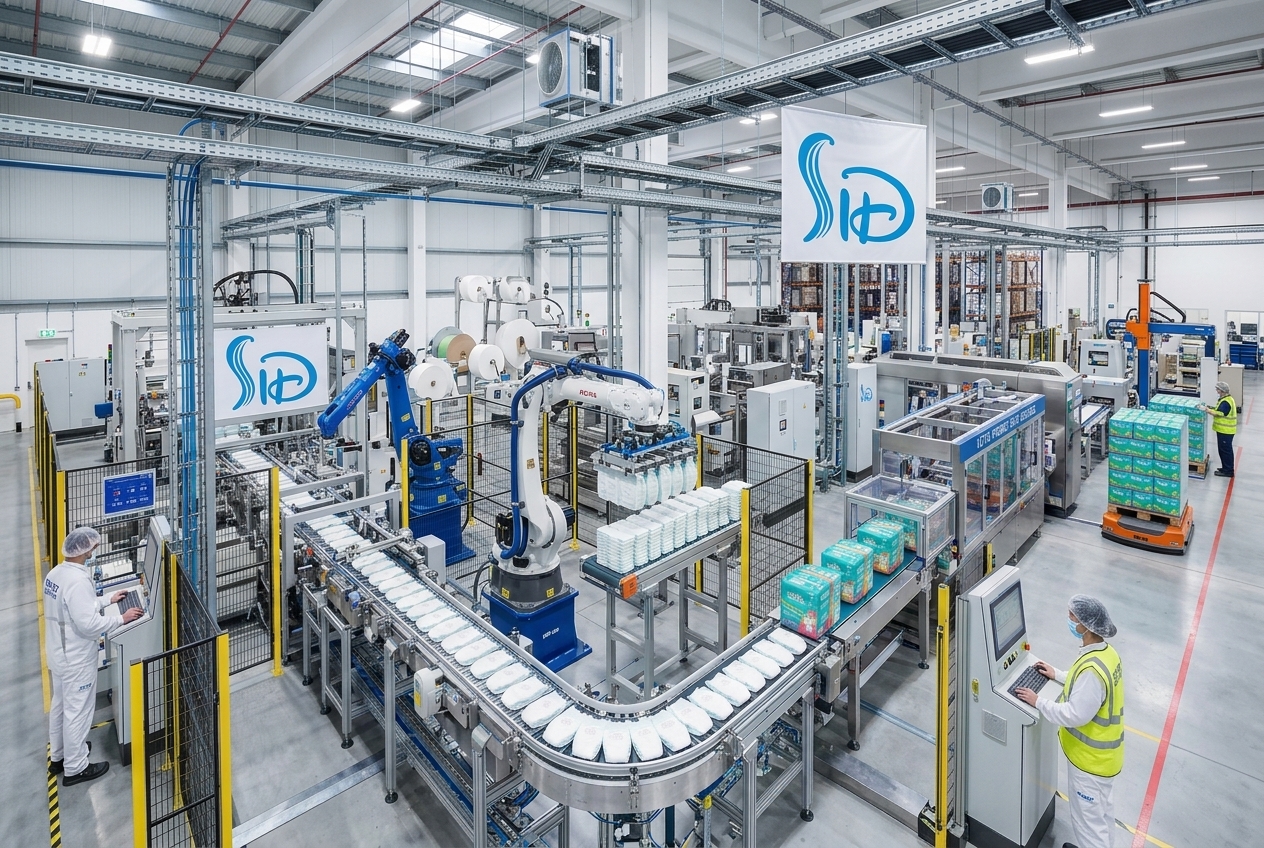
Consistently delivering millions of zero-defect drinkware units demands absolute process discipline and integrated robotic automation. Within Unifan's 65,000 square meter Quanzhou manufacturing campus, every insulated container progresses through an automated 14-stage production sequence, monitored by four rigid quality inspection gates: Incoming Quality Control (IQC), In-Process Quality Control (IPQC), Final Quality Control (FQC), and Outgoing Quality Control (OQC).
- Sheet Coil Slitting & Precision Blanking: Laser micrometer-guided slitting of certified SUS304/SUS316 coils into flat circular disks with zero burr formation.
- Multi-Stage Tandem Hydraulic Deep Drawing: Progressive hydraulic press forming of inner and outer shells with automated robotic workpiece transfer arms.
- Ultrasonic Multi-Frequency Aqueous Degreasing: Complete removal of residual drawing oils and lubricants using eco-friendly alkaline ultrasonic wash stages.
- Rotary Neck Spinning & Thread Rolling: CNC multi-roller spinning forming high-precision neck diameters and hermetic sealing threads.
- Automated 3D Fiber Laser Trimming & Parting: High-speed robotic laser cutting ensuring perfectly uniform, burr-free edges on container mouths.
- Getter Placement & Bottom Cap Tack Welding: Robotic insertion of specialized chemical getter tablets, copper radiation foil, and outer bottom cap tacking.
- Continuous Multi-Zone High-Vacuum Brazing: Automated furnace cycle heating to 1050°C at ≤1.0×10⁻³ Pa using lead-free copper-nickel eutectic alloy.
- Dual-Station Infrared Thermal Vacuum Screening (100% Inline): Automated thermal imaging scanning every single vessel for surface temperature differentials.
- Electrolytic Pickling & Chemical Passivation: Automated acid bath formation of a high-density passive chromium oxide (Cr₂O₃) protective layer.
- Automated Electrostatic Powder Coating: GEMA Swiss electrostatic spray loops applying thermoset polyester powder coating cured at 200°C.
- High-Definition UV Digital / Screen / Laser Branding: Multi-color tactile cylinder UV printing, screen printing, or high-contrast fiber laser engraving.
- Food-Grade Silicone Gasket & Lid Subassembly: Ultrasonic bonding of lid components and automatic torque-controlled gasket placement.
- AQL 2.5 Multi-Point Pre-Packaging Inspection: Comprehensive dimensional, visual, drop, and hermetic air-pressure decay testing.
- ISTA-6A Certified Protective Packaging & Palletization: Final boxed assembly in recyclable FSC-certified master cartons with moisture-barrier liners.
A defining differentiator of Unifan's quality infrastructure is our rejection of statistical batch spot-checking for thermal performance. Every single vessel exiting the high-temperature brazing line travels along an automated conveyor into our Dual-Station Infrared Thermal Vacuum Scanning System. Robotic nozzles inject 90°C deionized water into each container while high-resolution FLIR radiometric thermal cameras scan the exterior sidewall. A hermetically sealed vacuum vessel maintains an exterior surface temperature rise ΔT ≤ 0.8°C. Any container exhibiting an exterior temperature deviation ΔT > 2.5°C is instantaneously detected and pushed into a quarantine scrap line by pneumatic ejector arms, guaranteeing a 100% thermal insulation yield for all downstream packaging.
7. Commercial Sourcing Decision Matrix, Tooling Amortization & Landed Cost Engineering
Strategic procurement leadership requires balancing upfront Non-Recurring Engineering (NRE) capital investments against recurring unit Free-On-Board (FOB) prices, logistics density, and retail margin structures. For brand executives planning programs around buyer factory audit, international delegation, quality validation, vendor qualification, and long-term contract execution, our financial modeling establishes clear decision criteria:
7.1 Private Tooling Mold Amortization Economics
Developing a proprietary drinkware silhouette—such as a custom 40oz contoured body, a branded ergonomic handle bracket, or a unique dual-venting closure—requires precision steel tooling:
- Progressive Deep-Drawing Stamping Dies: Typically involves 5 to 7 progressive stamping die stages machined from hardened Cr12MoV or tungsten carbide tool steels. Typical tooling capital cost ranges from $12,000 to $22,000 USD depending on body height and taper complexity. Die production life exceeds 500,000 press strokes under scheduled preventative maintenance.
- Precision Injection Molds for Closures & Handles: Multi-cavity injection molds engineered from imported S136 stainless mold steel with balanced hot-runner manifolds. Capital cost ranges from $8,000 to $16,000 USD.
- Tooling Amortization Analysis: On an initial production run of 30,000 units, a $15,000 mold investment adds $0.50 per unit. Scaled across an annualized volume of 100,000 units, the amortized tooling cost falls to a negligible $0.15 per unit. Crucially, Unifan offers full mold fee rebate credits once cumulative order milestones (typically 80,000 units) are achieved.
7.2 Landed Freight Optimization and Amazon ISTA-6A Drop Durability
Ocean freight shipping constitutes a substantial component of total landed product cost. A standard 40-foot High Cube (40' HQ) maritime ocean container provides an internal volume of approximately 68 to 76 cubic meters. Through proprietary carton design and nesting optimization, Unifan maximizes container volumetric cube efficiency:
- Container Loading Capacity: Utilizing high-density master cartons with internal corrugated honeycomb dividers, Unifan packs up to 22,800 units of 40oz handle tumblers into a 40' HQ container, compared to the standard industry average of 17,200 units. This packing efficiency reduces ocean freight cost per unit by up to $0.28 USD.
- ISTA-6A Certified E-Commerce Packaging: For omnichannel brands distributing via Amazon FBA or direct-to-consumer (D2C) channels, Unifan engineers Frustration-Free Packaging (FFP) certified to survive the standard 10-point drop sequence (drop heights from 46cm to 76cm onto solid concrete) without exterior denting, lid breakage, or vacuum loss.
8. Frequently Asked Technical & Procurement Questions (B2B FAQ)
9. Strategic Synthesis & Direct Factory Partnership Protocol
As international markets elevate technical benchmarks, mandate rigorous toxicological compliance, and accelerate carbon transparency, the competitive gulf between commercial trading brokers and advanced direct manufacturers will continue to expand. Sourcing success in the modern drinkware industry requires establishing direct partnerships with an enterprise that controls every link of its production chain—from precision tooling die machining and vacuum furnace brazing to certified clean-room assembly and automated multi-color surface decoration.
Quanzhou Unifan Import & Export Co., Ltd. welcomes international brand executives, product development engineers, and sourcing directors to partner with our technical team. Whether you are seeking to optimize landed container logistics for high-volume tumbler programs, develop a proprietary titanium hydration line, or ensure 100% compliance with upcoming European and North American food-contact regulations, our engineering desk is at your disposal.
Partner with Quanzhou Unifan on Your Next Drinkware Program
Receive a comprehensive factory direct quotation, 24-hour digital DFM engineering feedback, and verified laboratory compliance dossiers tailored to your brand's specifications.